Disclosure : This post may contain affiliate links or paid partnerships. I may earn compensation if you click a link or make a purchase, at no additional cost to you. See my disclosure for more info.
You’ve probably read the surface-level guides. “Add a macramé wall hanging. Buy some rattan furniture. Get a monstera.”
And you’ve tried it. And it still doesn’t quite look right.
That’s because bohemian design isn’t about individual elements. It’s about relationships. How things interact, how they scale against each other, how the room’s overall composition holds together as a complete whole.
This guide goes deeper. It covers the foundations, the systems, and the finishing details that distinguish a genuinely beautiful bohemian room from one that’s simply trying. Thirty-five ideas. Practical, specific, and actionable. Let’s go.
Why Bohemian Spaces Feel So Good — And Why Yours Might Not (Yet)
There’s a reason certain rooms stop people in their tracks.
It’s not the individual pieces — it’s the cumulative sense of a life lived fully inside the space. Objects that have history. Textiles that have texture. Plants that have been tended. Light that has warmth. That total effect is what bohemian design delivers when it’s executed well.
What goes wrong is oversimplification. People buy a macramé wall hanging and a few throw pillows and expect the room to feel transformed. It doesn’t, because the components aren’t interacting — they’re just occupying the same space without a shared logic.
Bohemian design is a system. Understanding the system changes everything.
Before You Decorate: Getting the Foundation Right
The most important work in a bohemian room happens before you add a single decorative object.
Your walls, floor, and anchor furniture set the conditions for everything that follows. Get them right, and every layer you add will work. Get them wrong, and you’ll spend years fighting the room instead of enjoying it.
1. Neutralize your largest surfaces first. Walls in warm white or soft cream. A neutral backdrop is not boring — it’s the most versatile design decision you can make for a layered space.
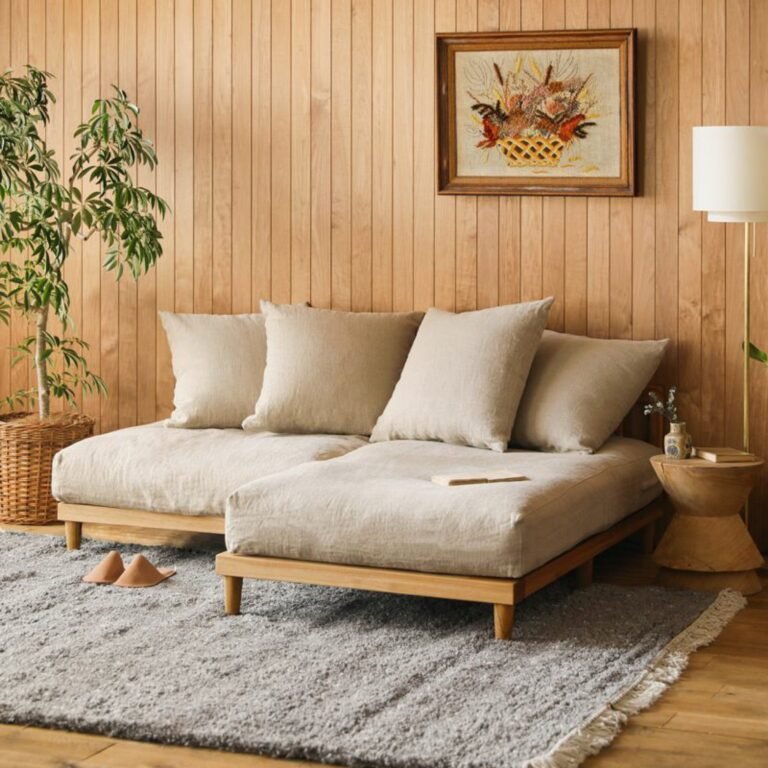
2. Choose an anchor sofa that leans relaxed. Deep cushions, low arms, slightly soft lines. A linen-covered sofa in cream or sand is the classic anchor for good reason.
3. Add natural texture at floor level. Raw wood, stone, or a large natural-fiber rug in jute or sisal. The contrast of organic texture against walls and furniture grounds the entire room.
Mastering Textiles: The Core of Every Great Boho Room
Experienced designers know this truth: textiles will always outperform furniture in terms of transformation per dollar spent.
A basic room dressed in extraordinary textiles outperforms an expensive room with minimal soft furnishings every single time. This is where your investment of time — and money, where you have it — should go.
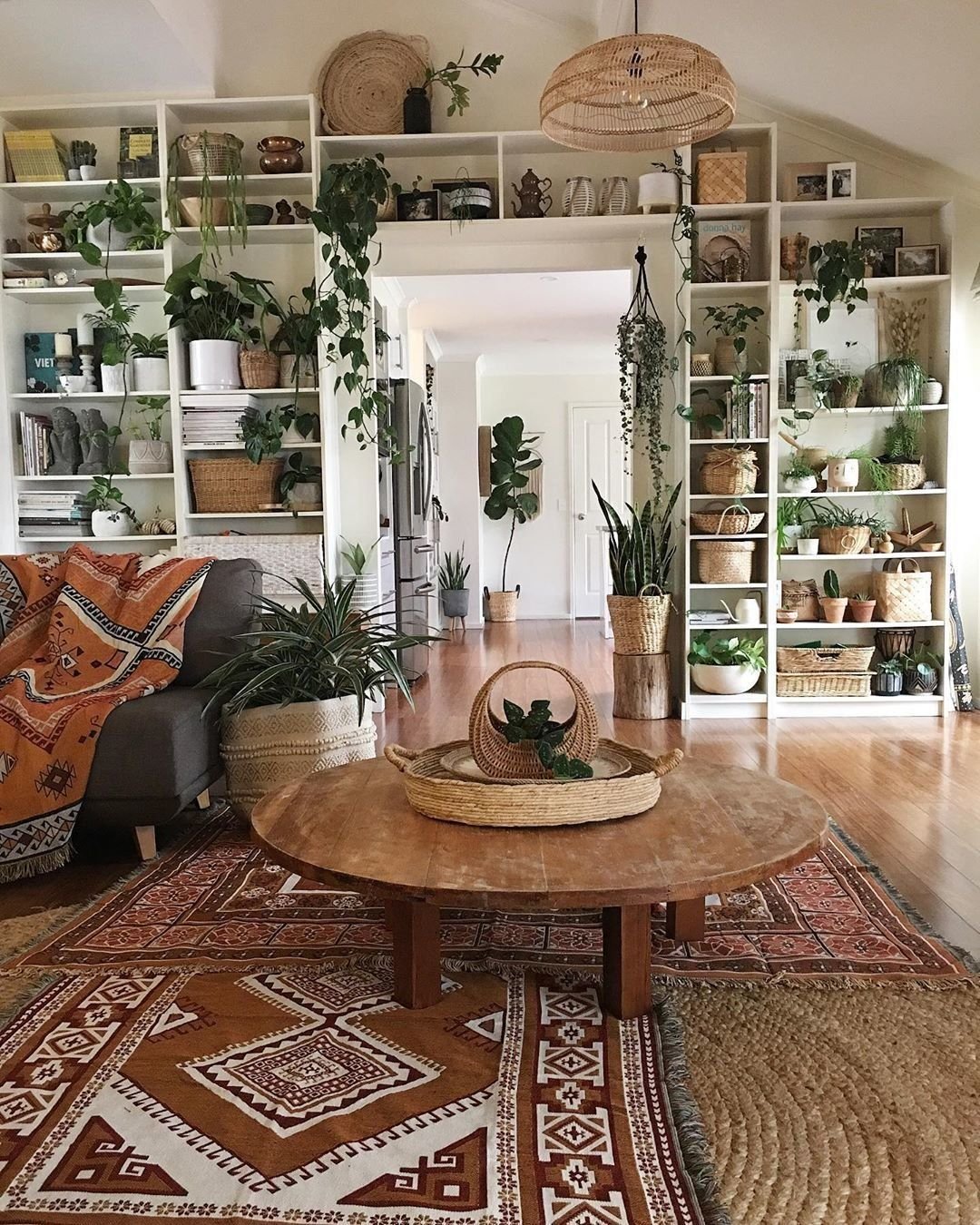
4. Layer rugs for visual depth. A flat-weave natural rug as the base, topped by a smaller vintage Persian or kilim rug. The overlay creates warmth and texture that no single rug achieves on its own.
5. Build a pillow collection by category and texture. Lumbar pillows for lower-back support and visual variety, oversized square pillows for volume, round bolsters for balance. Different textures — velvet, mudcloth, linen — unified by a shared palette.
6. Use a Turkish towel or woven throw as a casual drape. Over the arm of the sofa, loosely, as if it just landed there. That studied carelessness is an art form that signals real confidence.
7. Hang a textile on the wall instead of a print. A woven tapestry, a vintage Moroccan kilim, a block-print panel. These add tactile dimension that framed prints never achieve.
A Practical Guide to Color Palettes That Work in Boho Spaces
Let’s be direct about this: bohemian design does not mean you use every color you love all at once.
Restraint is the key variable. The most admired bohemian rooms are built on a narrow, intentional palette — usually just three or four tones — with texture doing the heavy lifting rather than color quantity.
8. Warm earthy tones. Terracotta, dusty blush, golden ochre, raw linen. A palette that reads as sun-warmed and instinctively inviting.
9. Cool, pared-back boho. Washed indigo, stone, bleached oak, antique brass. Quieter but no less distinctive in its material language.
10. Rich jewel palette. Olive, rust, deep mustard, dark teal. Bold without being heavy, so long as all tones stay within the warm register.
Pick one. Hold every future purchase against it. Resist adding colors simply because they’re appealing in isolation.
Plant Styling Strategies for a Thriving Bohemian Living Room
Plants are one of the few design elements that improve continuously over time.
A monstera planted today will be twice as dramatic next year. A trailing pothos becomes a curtain of green over months. Plants reward patience in a way that furniture simply cannot match.
11. Place one large statement plant in the room’s most underused corner. A bird of paradise, a fiddle leaf fig, or a large monstera. Single large plants carry enormous visual weight that a grouping of small ones never replicates.
12. Build vertical interest with plants at multiple heights. Floor, shelf, table, and hanging. The staggered heights guide the eye and make the room feel larger and more alive.
13. Conceal nursery pots inside woven baskets as planters. Rattan and seagrass baskets instantly elevate even a basic plastic pot. The transition is inexpensive and entirely convincing.
14. Add one macramé hanger in a corner with vertical space to spare. A trailing pothos or heartleaf philodendron is ideal. Stop at two hangers maximum to avoid the greenhouse effect.
Thoughtful Lighting That Shifts the Entire Mood of a Room
Most people underestimate how much lighting controls the success of their room. The right light makes everything look better — the textiles, the plants, the furniture, the art. The wrong light undoes all of it.
15. Replace a flush-mount ceiling light with something made of natural material. A rattan pendant light or a woven chandelier adds warmth and organic form overhead, immediately changing the room’s character.
16. Layer floor lamps with warm bulbs at multiple heights throughout the room. Two or three floor or table lamps create zones of warm light that feel intentional and genuinely inhabitable. Always use warm white bulbs — 2700K or below.
17. Use candles in brass or ceramic holders across multiple surfaces. The flicker of real flame creates a warmth that no static light source can replicate. This is not optional in a bohemian room.
18. Deploy string lights narrowly and specifically. Inside a glass vessel, along a single shelf. Not strung across the ceiling — that reads as unresolved and slightly juvenile.
Building a Furniture Mix That Looks Curated, Not Accidental
The strategic approach to furniture in a bohemian room is simple: buy pieces as if you’re collecting, not decorating.
A matching furniture set signals one shopping session and one decision. A well-collected room signals months of intentional acquisition, a developing eye, and genuine personality.
19. Mix wood finishes deliberately. Different species and different stain depths — all warm-toned. Contrast in wood creates the sense of accumulated time that matching furniture fundamentally lacks.
20. Add at least one piece of rattan or cane furniture. An armchair, a console, a side table. Rattan is the defining material of boho interiors because it simultaneously adds texture and keeps the room visually light.
21. Consider a vintage trunk or chest as a coffee table. It’s a conversation starter, a storage solution, and often the most interesting object in any room it inhabits.
22. Include a floor cushion or low-level seat. Bohemian interiors are not afraid of ground-level seating. It changes the visual and physical relationship you have with the room entirely.
Wall Styling Ideas That Add Depth and Dimension
Your walls are the largest uninterrupted surfaces in the room. In bohemian design, they don’t get to be neutral bystanders. They participate.
23. Curate a gallery wall rather than centering a single piece. Mix frame materials — wood, brass, rattan. Mix content — photography, illustration, textile art, mirrors. Five to nine pieces, arranged organically. Odd numbers create natural asymmetry that grids cannot.
24. Install a large round mirror with a rattan or bamboo frame. Round mirrors interrupt expected geometry. They also amplify light and visually expand the space in a way that feels effortless.
25. Load floating shelves with selective, well-spaced objects. A ceramic vase, one plant, a book or two. Breathing room between objects is what makes each one look intentionally chosen.
The Accents and Objects That Elevate a Space From Good to Unforgettable
There’s a ceiling of quality that most rooms hit and never break through. The room looks good. But it doesn’t feel great. The difference is almost always in the small, sensory, personal details.
26. A Moroccan pouf serves multiple functions and fills negative floor space beautifully. Footrest, seat, low table. It’s one of the most genuinely useful objects in a bohemian room.
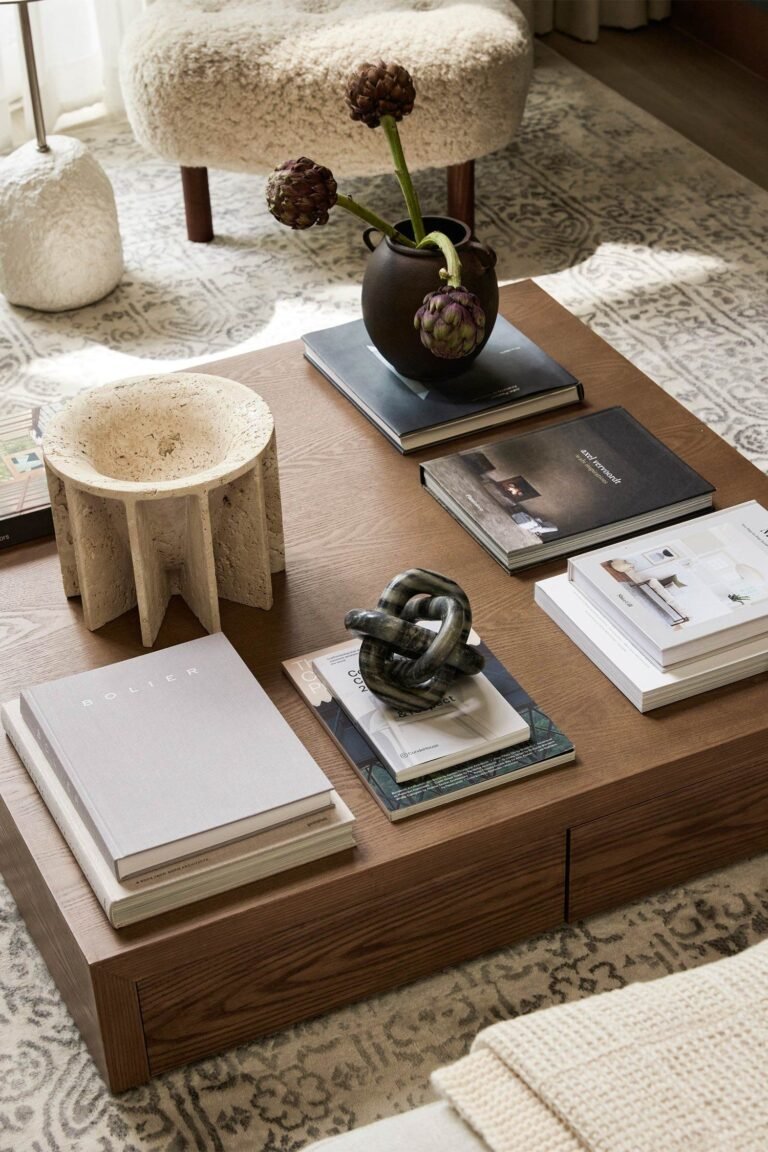
27. Treat books as objects, not afterthoughts. Face a few out on the shelf. Stack them on the coffee table. Choose titles that reflect your genuine interests — they are as much a self-portrait as anything else in the room.
28. Collect small brass objects intentionally. A brass tray, a candleholder, a small figurine. Warm metal anchors natural materials like linen, jute, and rattan, giving the room a sense of refinement.
29. Engage smell alongside sight. A diffuser with earthy scents — sandalwood, eucalyptus, or palo santo — completes the sensory picture of the room. A space that smells intentional feels intentional.
30. Add a sheepskin throw to a chair or sofa. It’s a textural contrast that plays beautifully against flat weaves and rough natural fibers — and signals immediate comfort.
Design Errors That Are Quietly Ruining Your Boho Room
Sometimes a room fails not because of what’s missing, but because of what’s wrong. These are the most common errors and exactly how to avoid them.
31. Over-theming neutralizes a room’s authenticity. When everything aggressively signals “boho,” the room stops feeling personal and starts feeling performative. Pull back. Let some pieces simply be beautiful.
32. Scale miscalculations undermine everything else. A rug that’s too small makes furniture look like it’s floating. A plant too large for its corner looks stressed. Scale must be resolved before the details can sing.
33. Overfilled surfaces kill visual clarity. Negative space isn’t a sign of unfinished decorating — it’s the breath between words that makes the rest of the composition readable.
34. Buying everything in one go produces a room that feels staged. Let your space develop organically. Add one piece when it feels right, not all at once because you’re impatient for the result.
35. Decorating to impress rather than to inhabit. The room should feel like yours — not like a reference image. Borrow ideas freely, but make every piece earn its place in your specific life.
Now Is the Moment to Build the Room You’ve Been Imagining
The information is in front of you. You know the foundation. You understand the system. You can see how the layers build on each other, and what happens when they don’t.
What’s left is the first step. It doesn’t have to be a major renovation or a significant purchase. It can be as small as swapping a light fixture, layering in a second rug, or positioning a plant in the right corner.
From that small start, everything else becomes easier. Bohemian rooms improve with time and attention, reflecting your evolving taste and the life you’re actually living inside them.
Start now. Build slowly. Arrive somewhere worth staying.
🔍 Focus Keyphrase: bohemian living room designs
📌 SEO Title (< 60 chars): 35 Bohemian Living Room Designs That Feel Like a Getaway
🔗 Slug (< 60 chars): bohemian-living-room-designs
📝 Meta Description (< 155 chars): Discover 35 bohemian living room designs that are chic, cozy, and effortlessly styled. Get practical tips to transform your space into a boho getaway today.