Disclosure : This post may contain affiliate links or paid partnerships. I may earn compensation if you click a link or make a purchase, at no additional cost to you. See my disclosure for more info.
Your backyard has potential you’re not using.
That’s not a criticism. It’s just true.
Most outdoor spaces are treated as afterthoughts. Maintained, sure. Occasionally watered. But never really designed for living in.
So they sit there. A lawn. Some air. A sky. And not much reason to go out and experience any of it.
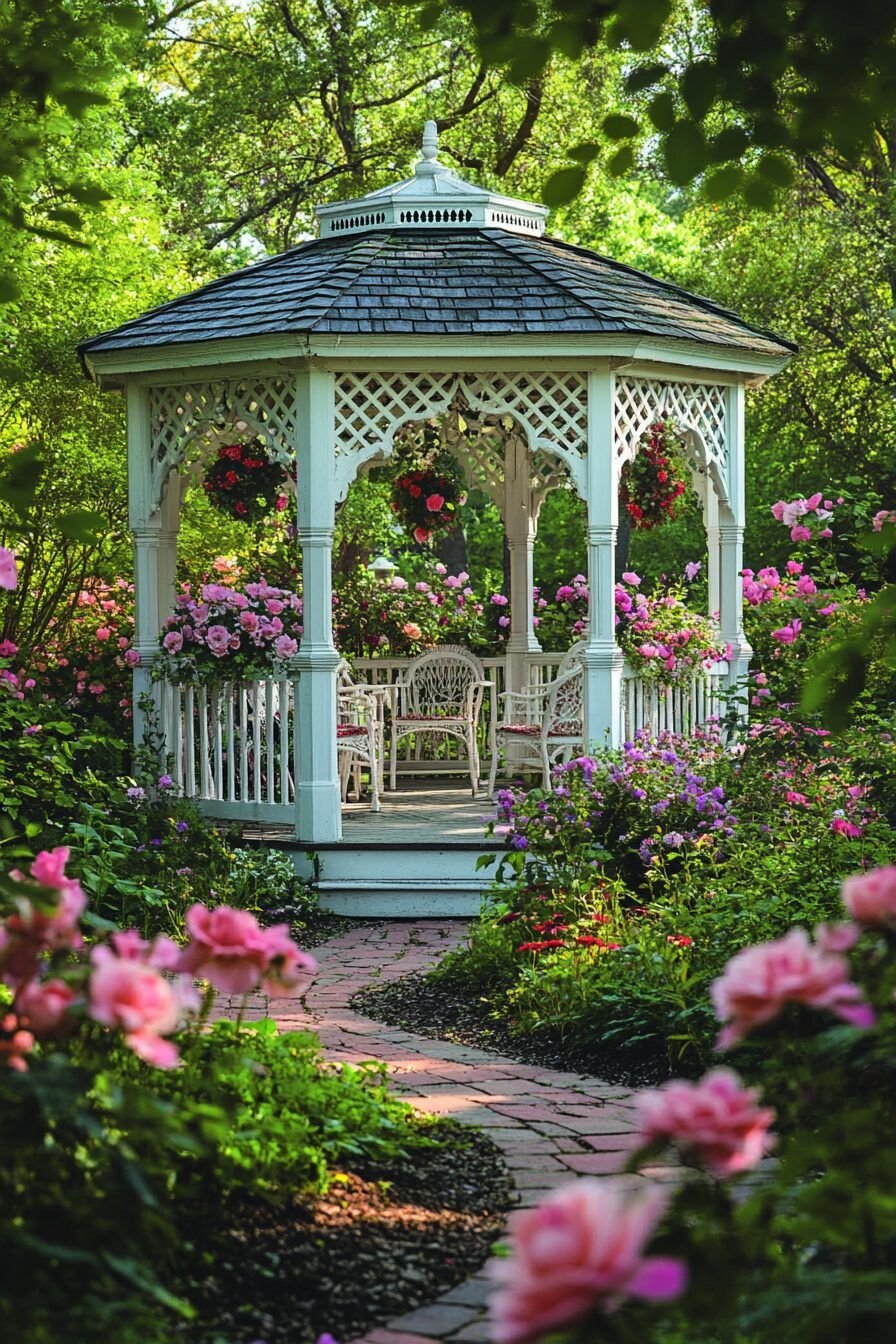
Meanwhile, somewhere online, there’s a backyard with soft string lights overhead and a gazebo draped in curtains and a table set for dinner and it looks like the kind of place people actually live in.
You want that. You deserve that.
And a gazebo — the right one, set up the right way — is how you get there.
Here’s the complete guide.
Why an Open Backyard Stays Empty (And How a Gazebo Changes the Dynamic)
Your brain is wired for rooms, not fields.
Rooms make sense. They have defined edges. They contain furniture that clarifies what you’re supposed to do. Sit here. Eat here. Relax here. The boundaries and the objects inside them communicate function.
An open yard has no such structure. It’s a canvas with nothing on it. And blank canvases, paradoxically, are harder to use than pre-arranged ones.
A gazebo brings the logic of a room outside. It frames a space, anchors it, and gives your brain enough structure to recognize it as a place to settle into.
The mistake most people make is stopping at the structure itself. They put up the gazebo and wonder why they still don’t use the backyard.
Because a frame without furnishings is still just a frame. What happens inside and around it is where the space comes alive.
1. Right-Size the Gazebo for the Yard You Actually Own
Too big a gazebo is worse than no gazebo at all.
It dominates the yard. Kills the proportions. Makes everything feel crowded and dark. It’s the landscaping equivalent of buying a sectional sofa for a studio apartment.
Let the size of your yard guide the size of your structure.
Tight on space? A compact 8-foot gazebo or a slim metal pergola adds definition without consuming the whole yard.
Average yard? A 10-by-12-foot hardtop gives you a full living space — enough for proper chairs, a table, plants, and room to move without bumping elbows.
Larger property? Zone it out. A pavilion or large octagonal gazebo can anchor a lounge corner, with a separate hammock area nearby for a secondary destination.
Look at your house style too. The gazebo should read as an intentional extension of the home, not an architectural accident. Match the design vocabulary — materials, color, silhouette — and the whole setup will feel considered.
2. Observe Before You Decide Where to Place It
Before you dig, anchor, or pour a single thing — spend time in your yard.
Not a glance from the back doorstep. Real time. Multiple occasions at different hours. Learning how your specific outdoor space actually works.
Where does direct sunlight hit and for how long? Where does shade fall by mid-afternoon? Is there a natural wind corridor that makes one area noticeably cooler — or colder — than another?
The goal is to place your gazebo where it will genuinely be used, not where it looks correct on paper.
Three things worth checking:
Shade availability. A gazebo in full afternoon sun is a gazebo you avoid from May through September. One in natural shade is one you use year-round.
Distance from the kitchen and back door. Comfort and convenience go hand in hand. If it feels like an expedition to get there, the frequency of use drops immediately.
The view from inside it. Face toward whatever is most beautiful in your garden. Turn your back on whatever is most functional and least pretty.
Good placement is the foundation everything else builds on. Take it seriously.
3. Lay a Real Floor Before You Bring In a Single Chair
Grass is many things. A viable floor for an outdoor living space is not one of them.
After a few rain events, grass under a gazebo becomes a patchy, muddy, unappealing surface that gets tracked inside, stains cushions, and undermines the entire aesthetic of the setup.
Install a proper floor and that problem disappears permanently.
Pea gravel: the entry-level solution. Lay landscape fabric first to prevent weeds pushing through, then add a two-to-three-inch layer of gravel. Self-draining, low maintenance, and tactilely satisfying underfoot. Done in a day.
Natural stone or pavers: more investment in time and effort, but the result is genuinely beautiful. Once laid properly they’re there for decades.
Composite decking boards: the premium option. Warm underfoot, easy to clean, completely splinter-free, and built to last with minimal ongoing attention.
Whatever material you choose: level the ground beneath it before any of it goes down. An unlevel floor means wobbly furniture, poor drainage, and a space that always feels slightly off no matter how nice the other elements are.
4. Approach Lighting as Three Separate Layers
The single thing that separates a backyard that looks nice by day from one that looks magical by night? Lighting.
But not just any lighting. Layered lighting. Intentional, warm, multi-level.
Layer one — ambient. String lights overhead. Hung across the gazebo ceiling or draped from rafter to rafter. Warm white bulbs — not cool, not daylight, warm. This is the glow that makes people look at your garden and ask if you live in a boutique hotel.
Layer two — task. A lantern or compact lamp on the central table. Enough light to see clearly without defeating the atmosphere the string lights are creating.
Layer three — accent. Ground-level stake lights or LED strips at the base perimeter. This upward wash of light makes the structure glow and marks it as a destination from anywhere in the garden.
Three layers. Almost entirely solar powered. No electrician, no wiring, no monthly electricity bill increase. Just atmosphere that arrives every evening without you lifting a finger.
5. Add Screening So the Space Feels Genuinely Private
The moment you feel observed, the quality of your relaxation collapses.
Your body stays partially guarded. The tension in your shoulders doesn’t release. And despite being in a beautiful space, you never fully arrive in it.
Solve the visibility issue and the space begins working the way it’s supposed to.
Weatherproof curtains on the gazebo posts are the fastest solution. Close them for seclusion; pull them back and tie them off when you want the view and the breeze. Incredibly versatile and the visual effect is substantial.
A planted trellis screen with a climbing fragrant plant gives you privacy that improves every season and smells like a garden should.
Oversized planters with tall ornamental plants — bamboo, silver grass, large-leafed tropicals — in substantial pots provide immediate, moveable screening.
Don’t screen all four sides. Enclosure feels restful; full enclosure feels claustrophobic. Leave the most beautiful sight line open.
6. Furnish the Space Like It Deserves to Be Comfortable
The minimum viable outdoor setup — a couple of hard chairs and a wobbly table — communicates one thing: this space was not designed for staying in.
So you don’t stay. You wander back inside within twenty minutes and spend the rest of the evening on the sofa.
Your gazebo deserves better. And so do you.
Start with seating you’d genuinely choose to stay in. Deeply cushioned outdoor chairs or a proper outdoor loveseat with dense upholstery. Comfort here isn’t a luxury — it’s the whole point.
Add a surface of some kind. A coffee table, a solid side table — anywhere you can set things down so you’re not holding your drink all evening.
Then layer in the elements that make it feel like a room: outdoor cushions and pillows in colors you love, a light throw for cool nights, and an outdoor rug underneath everything to unify the layout and add warmth underfoot.
Not expensive. But completely transformative.
7. Grow Plants Into the Design from Every Direction
A beautiful gazebo sitting in a bare, empty yard looks exactly like what it is: a structure that was just installed. Nothing around it says “this belongs here.”
Plants are the solution. They soften, frame, and integrate. They turn a structure into a place that feels like it grew organically from the garden around it.
Low level around the base: groundcover, herbs, or low ornamentals that trail over the edges and soften the foot of the posts. Lavender is the classic answer — compact, hardy, and its fragrance is unmatched.
Mid-level around the outside perimeter: structured shrubs or grasses that create a visual border and frame the structure with greenery on all sides.
At height inside the gazebo: Hanging baskets with trailing ferns or ivy from the rafters, standing planters with architectural specimens, a tabletop herb garden for fresh cuttings.
Short plants in front. Taller behind. Tallest at the back. This depth creates visual richness that no amount of furniture can replicate.
Don’t hold back. Greenery is the one element where more almost always equals better in an outdoor oasis.
8. Go Beyond Looks — Design for the Full Sensory Experience
The outdoor spaces that feel like genuine retreats aren’t just well-designed. They’re multi-sensory experiences.
Visual beauty is the starting point. What the best spaces have beyond that is engagement of sound, scent, and touch.
Sound. A compact solar water fountain nearby creates a continuous gentle sound that acts as a kind of auditory barrier between you and everything stressful. The effect on the nervous system is almost immediate.
Deep-toned wind chimes add their own quality — the kind that makes a light breeze feel like an event.
Scent. Grow aromatic plants in arm’s reach. Rosemary, lavender, lemon verbena. A breeze becomes aromatherapy. A citronella candle adds scented warm light and keeps insects away simultaneously.
Touch. Use varied materials. Rough and smooth. Soft and hard. Warm and cool. The mix of textures in a space is what the hands and feet feel as they move through it, and it contributes quietly but powerfully to the overall sense of quality.
When sight, sound, smell, and touch are all addressed, the space moves from decoration into genuine experience.
9. Take Weatherproofing Seriously Before You Regret Not Doing So
This is the unsexy truth that every outdoor project eventually encounters.
Weather is patient and consistent and it will degrade anything you don’t protect.
Cushion mold. Wood rot. Rust spreading across metal frames. Canopy fabric going thin and tearing at the seams. It’s all completely avoidable — if you act in advance rather than in response.
Cushions: water-resistant fabric or foam that doesn’t retain moisture. Move them into a weatherproof storage container before storms hit. Simple, fast, completely effective.
Wood: apply weatherproof sealant or penetrating stain every one to two years. A half-day of maintenance adds years to the structure’s life.
Metal: inspect every spring for rust. Address spots early with rust-inhibiting paint. Small problems addressed early stay small.
Fabric panels and canopies: bring them in ahead of major storms and over winter. Folded, dry, stored. They’ll last years longer than those left in place year-round.
Build it well. Protect it well. Use it indefinitely.
10. Anchor the Gazebo Completely and Permanently
The tip that matters most for safety.
Wind has no aesthetic appreciation for what you’ve built. A soft-top gazebo in a strong wind becomes a projectile traveling at considerable speed in an unpredictable direction.
Damage to vehicles, fences, windows, and neighboring properties happens every season to homeowners who thought their setup was “probably fine.”
Canopy and soft-top gazebos: proper heavy-duty ground stakes, sandbag weights on every post, guy ropes in windier locations. Not the basic pegs from the packaging. Real anchoring hardware.
Hardtop and permanent wooden structures: anchored into concrete — poured slab, footings, or bolted directly to an existing deck surface. No exceptions, no postponements.
Do this properly on day one. It’s a few hours of work. After that, you can sit through a thunderstorm in your gazebo and not worry about the structure once.
That peace of mind is part of what an oasis is supposed to give you.
The Only Question Left Is When You Start
Ten steps. All of them real and all of them doable.
The backyard you’ve been scrolling past on Pinterest is not beyond reach. It just requires someone to start building it.
That someone is you. This weekend.
Don’t start with all ten steps. Start with one.
Hang some lights. Lay an outdoor rug. Add one potted plant. Move the gazebo six feet left to where the afternoon shade actually falls.
One thing. Then another.
And before this season is out, you’ll have a garden space worth sitting in. Worth staying in. Worth being proud of.
Your backyard is ready when you are.
Go make it happen.
🔍 Yoast SEO Checklist
🔍 Focus Keyphrase: gazebo garden oasis
📌 SEO Title (< 60 chars): How to Create a Cozy Garden Oasis with Gazebo Tips
🔗 Slug (< 60 chars): cozy-garden-oasis-gazebo-tips
📝 Meta Description (< 155 chars): Transform your backyard into a cozy garden oasis with these expert gazebo tips on placement, lighting, privacy, and more. Start building your retreat today!